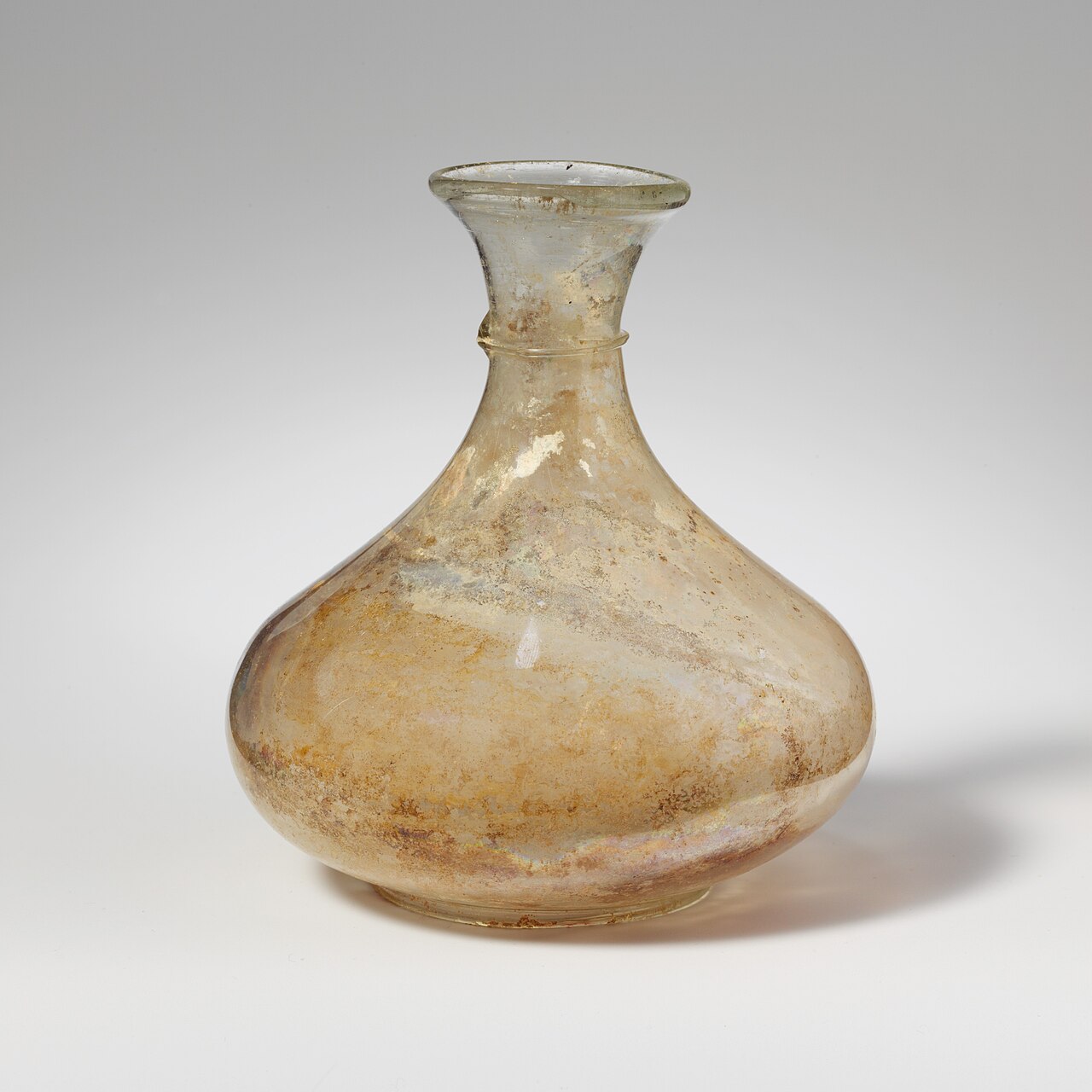
Roman Glass Flask
Blown glass made everyday storage light, cheap and see-through. This flask belongs to the first age when a bottle could be a throwaway object.
- Date
- 3rd century CE
- Maker
- Unknown Roman-period glassworker
- Place
- Eastern Mediterranean, Roman period
- Medium
- Blown glass
- Held by
- The Metropolitan Museum of Art
- Accession
- Sample record
Entry by Your Name
This is sample content. Replace it with your own object and keep the shape.
About this object
Glassblowing was invented around the first century BCE and spread across the Roman world within a few generations. A worker gathered molten glass on a pipe and inflated it, making vessels in minutes that would have taken days to carve from stone.
Looking closely
The walls are thin and the neck long. Slight irregularities in the surface show it was shaped by breath and hand, not a mould.
Look closer: why is it iridescent?
Buried glass slowly reacts with the soil and forms thin layers that split the light into colours. The shimmer you may see on an ancient bottle is the mark of its time underground.
Why this object is in the collection
It is evidence that ordinary people owned glass. What had been a luxury material became a container for oils, perfumes and medicines.
Sources
- Author. Title. Publisher, Year.