Ritual Grain Vessel (Gui)
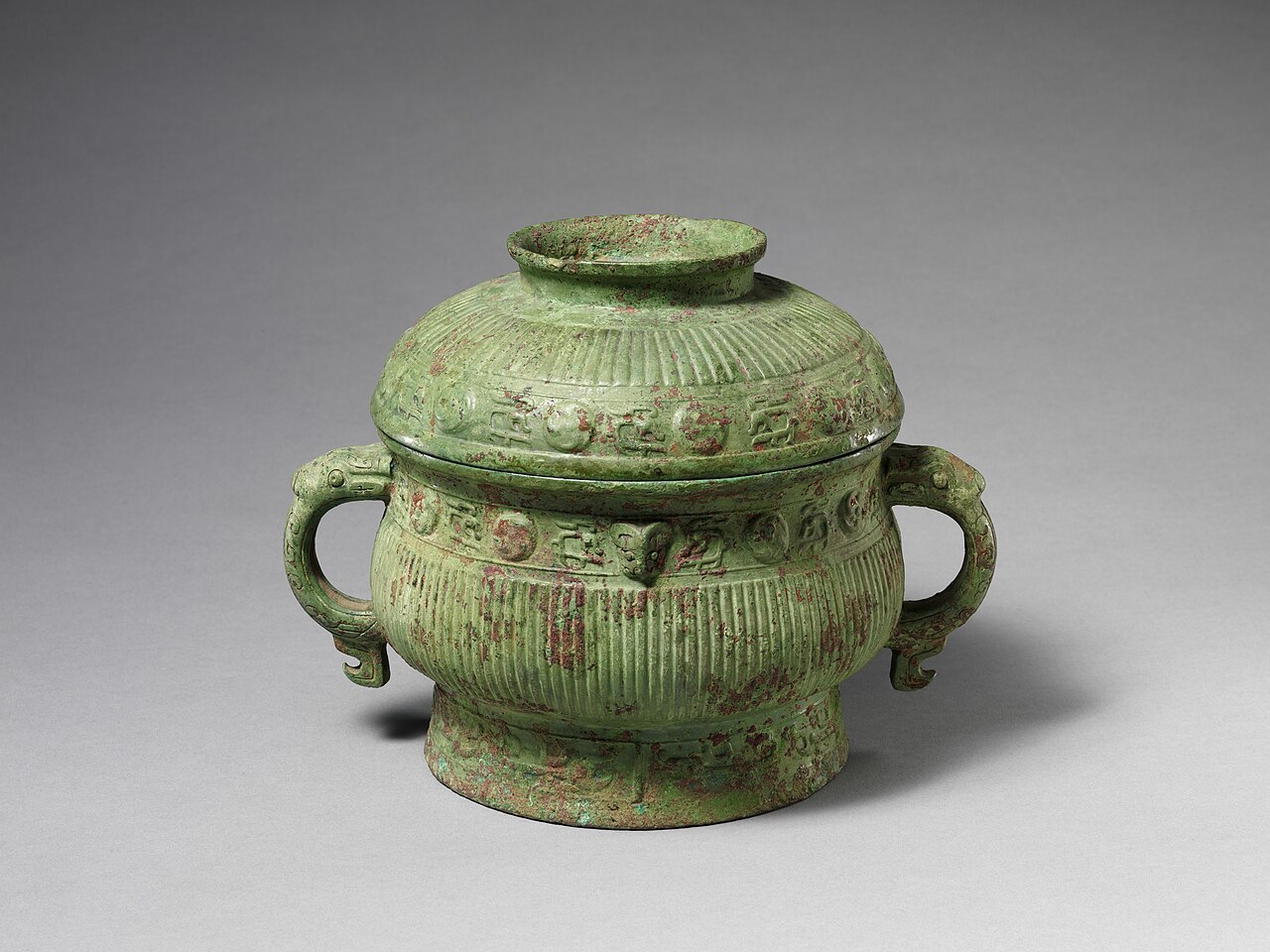
A bronze bowl made to hold offerings of grain, cast for rituals that tied a family to its ancestors and to the king.
- Date
- late 11th-early 10th century BCE
- Maker
- Unknown Zhou bronze foundry
- Place
- China (Western Zhou dynasty)
- Medium
- Cast bronze
- Held by
- The Metropolitan Museum of Art
- Accession
- Sample record
Entry by Your Name
This is sample content. Replace it with your own object and keep the shape.
About this object
A gui was a bronze food vessel used in ceremonies. Families offered grain to ancestors in sets of vessels like this one. Some carry inscriptions inside, recording who made them and why.
Looking closely
The bowl is supported on a base, with handles at the sides and a band of decoration around the body. Bronze like this was cast in clay moulds, so every line was prepared before the metal was poured.
Look closer: why cast an inscription?
Words inside a bronze vessel were meant for ancestors, not for guests. The inscription was a message sent by way of the offering.
Why this object is in the collection
Bronze was costly and political. Owning ritual vessels meant having the right to take part in rituals that defined who belonged to the ruling world.
Sources
- Author. Title. Publisher, Year.