Scarab Commemorating a Royal Marriage
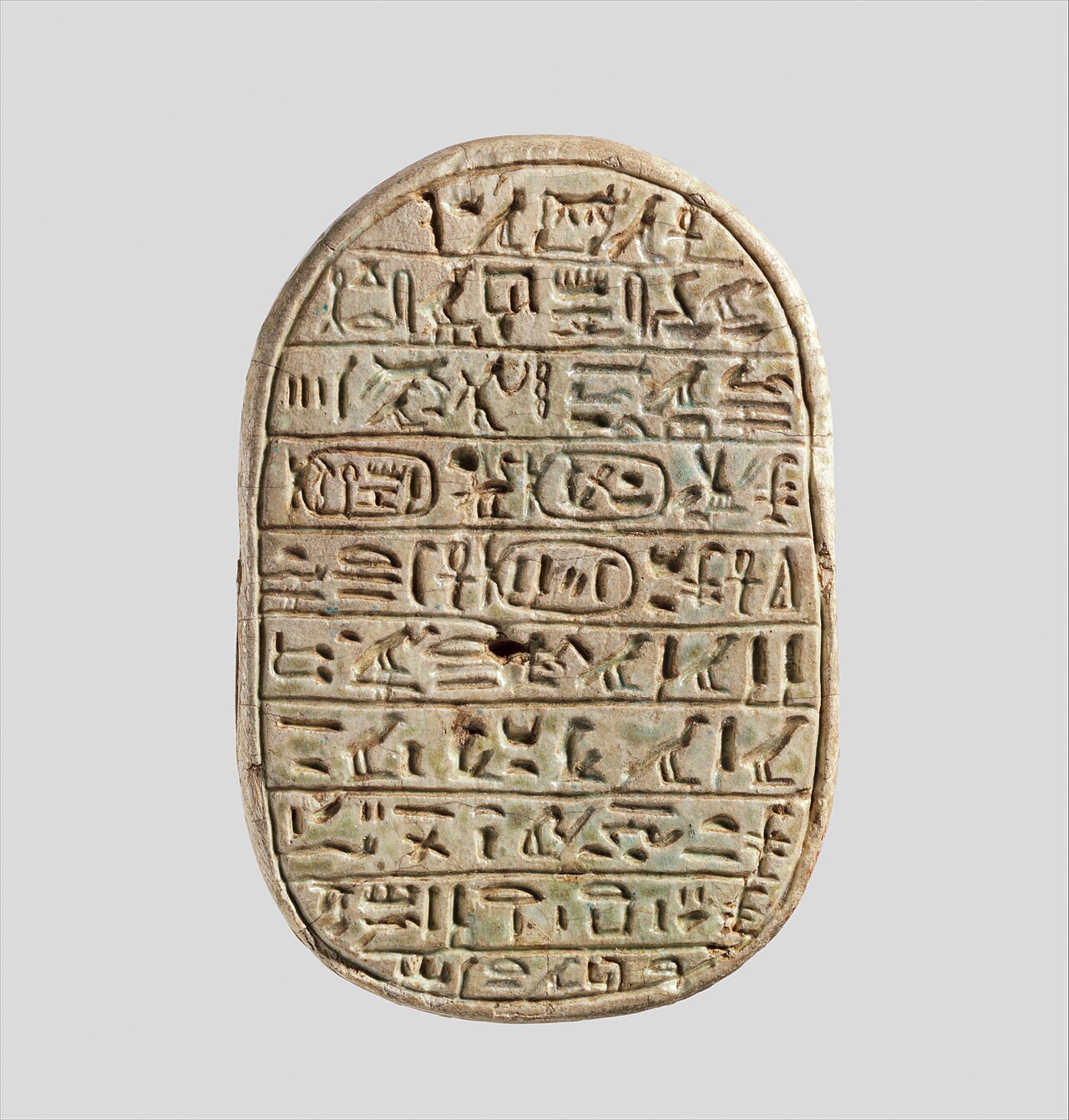
A palm-sized beetle carved with a news bulletin. Pharaoh Amenhotep III used scarabs to announce his marriage to Queen Tiye across the known world.
- Date
- about 1390-1352 BCE
- Maker
- Unknown Egyptian workshop
- Place
- Egypt (New Kingdom, Dynasty 18)
- Medium
- Glazed steatite
- Held by
- The Metropolitan Museum of Art
- Accession
- Sample record
Entry by Your Name
This is sample content. Replace it with your own object and keep the shape.
About this object
The scarab beetle was a symbol of renewal in ancient Egypt, and its shape was a favourite for seals and amulets. This one is different: its flat underside carries a text naming the king and his queen. Copies were made in large numbers and sent out as a kind of royal announcement.
Looking closely
The beetle is shown simply, with its wing cases and head marked by a few incised lines. The real subject is underneath, where the hieroglyphs fill the oval in tidy rows.
Look closer: why a beetle?
Egyptians associated the dung beetle rolling its ball with the sun being pushed across the sky each day. A scarab on an object suggested rebirth and protection, which made it a trusted shape for a message the king wanted to last.
Why this object is in the collection
It shows how a ruler could use a small, cheap, portable object as media. The same words, repeated on hundreds of scarabs, reached people who would never see the palace.
Sources
- Author. Title. Publisher, Year.