Own Your Work on the Open Web
Website templates for academics who want to publish, teach, and collaborate online—without renting space from platforms that come and go.
What is Xanthan?
Xanthan is a set of website templates and documentation built for people doing public-facing academic work. Choose a template, add your content in plain text, and publish—no coding, no installation, no monthly fees. Built on simple, durable web standards designed to last decades, not grant cycles.
Scholars seeking public engagement. Move your work beyond paywalls and PDFs. Build research portfolios, multimedia essays, and interactive arguments that reach broader audiences—on a site you control, not a platform that controls you.
Instructors teaching digital literacy. Turn class projects into real public scholarship. Students build collectively around shared themes—local history archives, community documentation, thematic collections—learning web fundamentals while creating work that outlasts the semester.
Students building professional presence. Create a portfolio that showcases your research, teaching, and digital skills. Own your academic identity rather than scattering it across platforms.
What Can You Build?
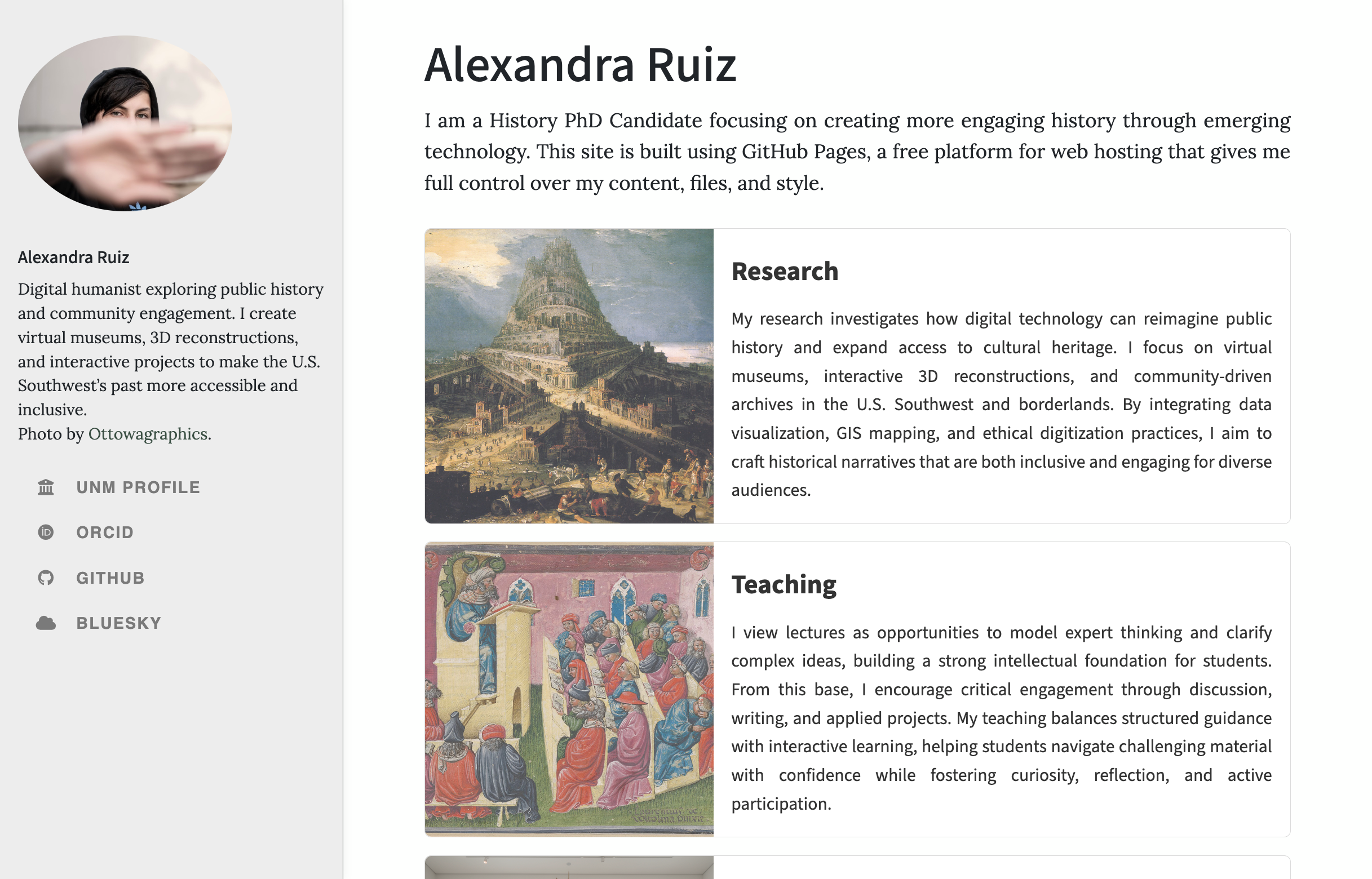
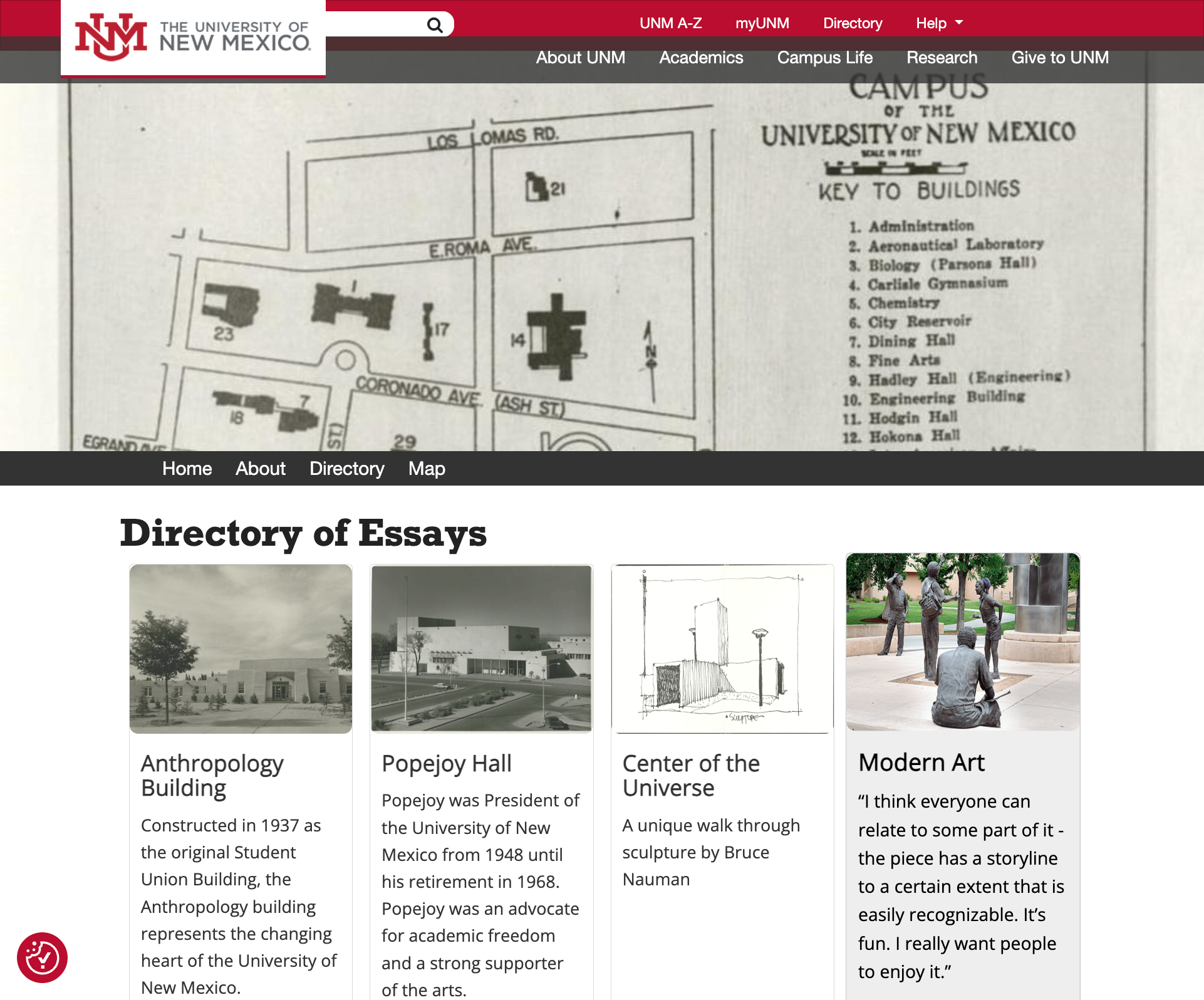
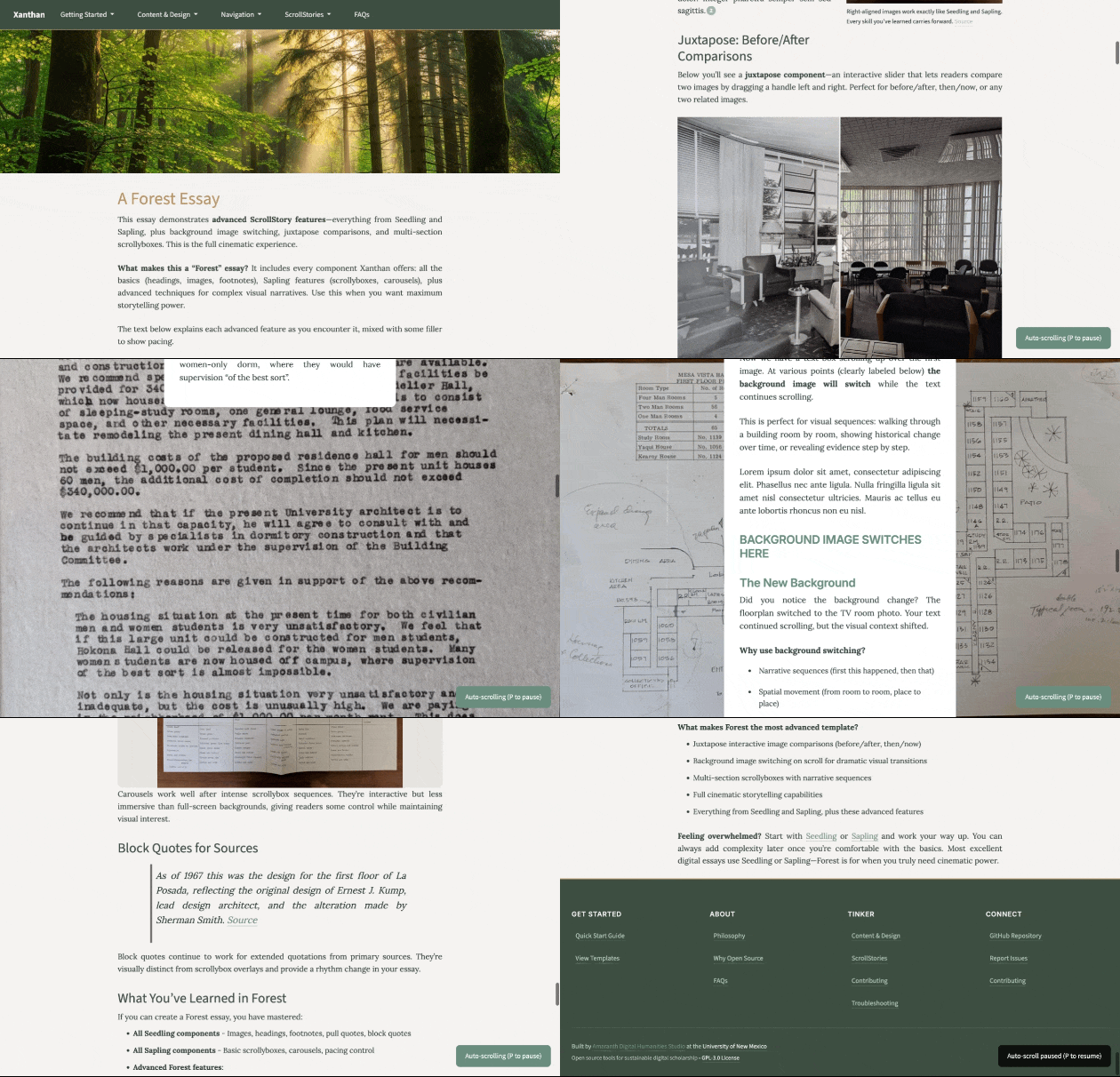
Ready to start? Choose a template and you’ll have a live site in minutes. Or see sites built with Xanthan →
Why Xanthan?
Digital humanities work should be as open in its process as in its product. Xanthan is built on a simple conviction: scholars shouldn’t have to rent their web presence from proprietary platforms, and they shouldn’t need a computer science degree to publish online.
You own your content
Your site is text files in a repository you control. Move it to any host. Take it between institutions. No platform lock-in, no terms-of-service surprises. It’s yours.
Built to last
HTML, CSS, and Markdown will outlive any proprietary platform. Static sites have no databases to secure, no software to update, no security patches to apply. What you build today will still work in 2050 with zero maintenance.
You learn by working
Markdown, GitHub, HTML, CSS—these aren’t “website skills.” They’re foundational to digitally-engaged humanities work. You pick them up naturally by building real projects, not by sitting through tutorials.
Free and open
GitHub Pages hosting costs nothing. No ads, no freemium upsells, no surprise bills. Students and colleagues can see how your site works, learn from your choices, and build on your code.
Built for AI Collaboration
Most website frameworks are a tangle of files where AI assistants guess and often guess wrong. Xanthan is structured differently: named design variables, modular components with documented parameters, clear file organization. AI can read the architecture and make changes that fit.
You describe what you want in plain language. The AI handles the implementation. You stay in the editorial role—judging results, giving feedback, deciding what’s right for your project.
Here’s what that looks like in practice:
-
“Give my site a warmer feel—cream background, dark brown text, muted terracotta accents.” The AI finds your color variables and adjusts the whole palette as a coordinated set.
-
“Create a page for my CV with proper headings and a clean layout. Here’s the content.” The AI generates a new page with the right structure, formatting, and navigation entry.
-
“My site won’t build. Here’s the error message.” The AI reads the error, identifies the problem, and walks you through the fix.
-
“Build a scrolling section where a background image stays fixed while text panels scroll over it.” The AI assembles the right components with the correct syntax—work that would take hours to learn from scratch.
Yes, it's like the gum.
Xanthan gum is a polysaccharide used as a binder and emulsifier—it transforms disparate ingredients into something cohesive and stable. This platform does the same: it binds simple, durable web technologies into a framework for digital scholarship. Text, media, code, and argument become a coherent whole with a long shelf life.
Good infrastructure, like good binding agents, should be reliable, unobtrusive, and built to last. Read more about our philosophy.
The best way to learn is to start
The guides look detailed—they walk through every step—but the process itself is surprisingly quick. Choose a template, click a few buttons to create your own copy, edit a text file, and you have a live website. The whole thing takes minutes, not hours. Reading about it takes longer than doing it.