Sword Guard (Tsuba)
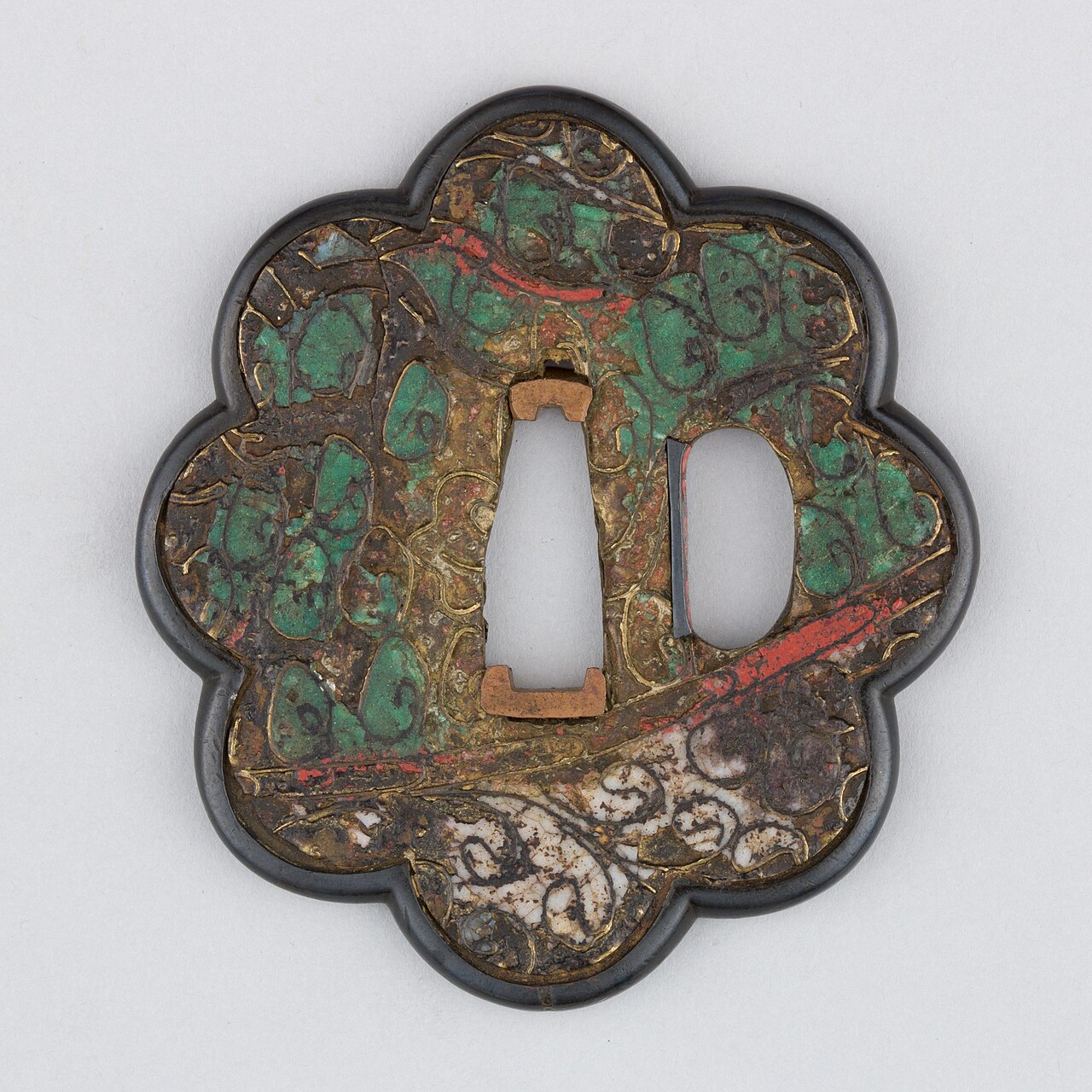
A palm-sized disc of metal that sits between a blade and a hand. In a peaceful age, the tsuba became a place for a samurai to show taste.
- Date
- 17th-18th century CE
- Maker
- Unknown Japanese metalworker
- Place
- Japan (Edo period)
- Medium
- Metal with inlay
- Held by
- The Metropolitan Museum of Art
- Accession
- 33.40.49
Entry by Your Name
This is sample content. Replace it with your own object and keep the shape.
About this object
A tsuba is the guard of a Japanese sword. Its job is practical: to stop the hand sliding onto the blade and to balance the weapon. During the long peace of the Edo period, swords were worn more as marks of status than used, and craftsmen competed to decorate their guards.
Looking closely
Notice the openings cut through the metal and the inlaid pattern around them. Designs often drew on nature, poetry or stories that the owner wanted others to recognise.
Look closer: what is the empty space for?
Pierced openings reduce weight, but they also create shapes of their own. Japanese metalworkers treated the gaps as part of the design, not as holes.
Why this object is in the collection
It shows how a tool became a statement. A sword guard is a small object that tells a viewer who its owner wanted to be.
Sources
- Author. Title. Publisher, Year.